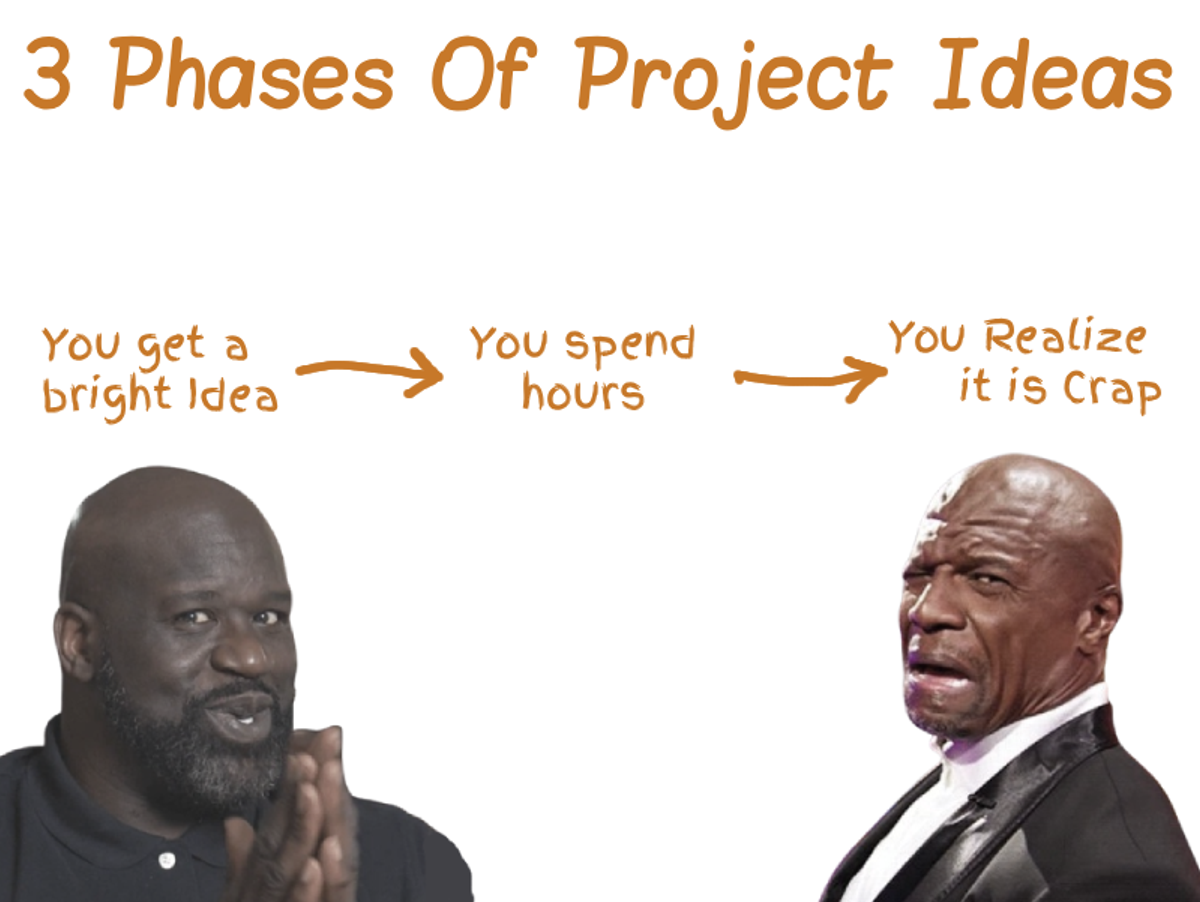
Most beginner project ideas fail for one simple reason:
They’re invented in isolation
Todo apps, weather apps, chat clones, youtube or spotify clones aren’t bad because they’re simple.They’re bad because no one asked for them.
If you want project ideas that:
- attract attention
- stand out in portfolios
- and could realistically make money
you need to stop copying tutorials and start looking at where real problems already exist.
Duct-taping “AI” with any existing system does not make it successful or worthy of your time. Forget that, lets look at how real ideas are generated. And this article shows you how to do exactly that.
The Core Principle (Everything Else Follows This)
Money appears where frustration already exists.
People pay when something:
- wastes time
- breaks often
- is confusing
- requires manual effort
- happens repeatedly
Your job isn’t to invent a problem. Software engineers are widely known for solving existing problems not create them. Your job is to notice problems people are already complaining about.
Why Tutorial Ideas Don’t Work
Tutorial projects or bootcamp projects are a good way to show people that you are a beginner fresh out of the academy. They have a very low chance of winning an interview.
These basic projects fail because they’re:
- artificially scoped
- built with fake or perfect data
- designed to teach syntax, not solve problems
In contrast, real projects are different. They have:
- constraints
- messy input
- edge cases
- trade-offs
And most importantly:
Someone is already trying to solve the problem. And very badly.
That’s your entry point. That is how you work out new project ideas to build on.
Where Paid Problems Hide (High-Signal Sources)
1. Freelancing Websites (Direct Proof of Payment)
Freelancing platforms are brutally honest. If someone posts a job in one of those sites, it means they are saying:
“This problem is worth money to me right now.”
What to look for in freelancing websites?
- Repeated job posts
- Low-budget but frequent tasks
- Phrases like:
- “Need something simple”
- “Just a small tool”
But how can I use those job posts as ideas, you ask?
- Read the job description
- Strip away client-specific details
- Identify the reusable core
Example
Lets say that the job post tell you:
“Build me a custom reporting dashboard”
But what you will build is:
A generic reporting dashboard template for freelancers or small teams
If one person paid for it, others will too.
2. Product Launch Platforms (Problems in Public)
Platforms like Product Hunt expose:
- early users
- honest feedback
- missing features
The comments are more valuable than the product.
Look for phrases like:
- “This would be great if…”
- “Too expensive for what it does”
- “I stopped using it because…”
Your project doesn’t need to compete these fully built products head-on. It just needs to:
- narrow the scope
- remove friction
- simplify usage
- cut down some features if you have to
You’re not building a startup, you’re building a sharper tool. You are not competing with these giants, you are building a solution to a problem. And that is exactly what interviewers like to hear.
3. Hacker Communities (Smart Complaints)
Technical communities complain differently. They don’t say “this sucks.” They say things like:
- “This breaks in edge cases”
- “The DX is terrible”
- “Setup is painful”
That’s gold. Being a technical person yourself, you can relate to their problems and understand exactly what is wrong. Their technical feedback gives you a better starting point at what solution you are trying to implement.
Where should I look, you ask?
- Hacker News threads
- GitHub issues
- Open-source discussions
You are not here to improve the algorithm. You improve the experience around it.
4. Browser Extensions & App Reviews (Tiny, Paid Pain)
Browser extensions or mobile apps are tiny products which you can install or remove without much friction. That makes them easier for people to quickly adapt them for a specific problem they are trying to solve. People usually install tools for:
- one missing feature
- one annoyance
- one repetitive task
Descriptions often brag about their cool features, but their reviews wil expose all their short comings. What you are looking for are comments like:
- “Stopped working”
- “Needs one more thing”
- “Overcomplicated”
Small pain + large audience = excellent beginner project.
5. Communities & Forums (Live Friction)
Reddit, Discord, Slack, and forums are real-time pain streams. If you are in the right place you will hear a lot of complaints which you can do something about. You need to search for patterns like:
- “Is there a tool for…”
- “How do you deal with…”
- “Why does X do this…”
If the same question appears repeatedly, that just means:
- the problem isn’t solved
- or the solution is too complex
That’s your opportunity to shine. Generalize the idea and start working on it.
How to Turn a Complaint Into a Project
It is way simpler than you imagine. Use this simple filter:
- Who has the problem?Be specific. “Freelancers”, “founders”, “developers”. Do not lump your target consumers as “users”. Being vague about your consumer-base will hurt you in the long run. It is ok if the targets are a very specific and niche.
- What do they do manually today?Manual steps mean automation opportunity. Learn about their steps and plan an automation pipeline.
- What’s the smallest useful solution?One workflow. One job. One outcome. Start with this as your Minumim Viable Product (MVP)
Example
Let’s say someone complained:
“Keeping track of client payments is annoying.”
You will build your idea around:
A simple Stripe payment status tracker for freelancers.
You are certainly not building a full accounting system. Your focus is to solve a specific problem. When you have solved it, think about how you are going to ship it and get user feedback. You app will grow from there.
The “People Would Pay” Test
Before you start working on anything, it is important to know if its worth it or not. Ask yourself this:
- Would someone pay $5–$20 for this? Or more?
- Would it save time, money, or frustration?
- Can I explain the value in one sentence?
If your answer is a clear, undoubted yes, then by all means, build it. If you are not sure, then keep digging, it is not a dead end yet. Those complaints existed for a reason.
Why This Approach Works (Even for Beginners)
You don’t need novel ideas, complex algorithms or a massive scope. This was never your focus. What you need is awareness, empathy and restraint.
Most paid tools which you will find in the wild are sometimes boring, small or narrow in scope or very focused in doing just one thing.
That’s good news for you since you don’t need to start with a massive scope and loose motivation somewhere in between the development roadmap.
Final Thought
Stop thinking what the youtube gurus are making you think. You can do much better if you invested your time in some real projects with real users waiting to use it.
Stop asking yourself “What project should I build?”
Instead a better approach is by start asking, “Where are people already struggling?”
The moment you answer that, the project idea reveals itself.
If this post clicked with you, you'll love the newsletter. It's where I share raw, no-fluff lessons from real projects. The kind of stuff you don't find in documentation.
If you feel like it, my community is always open for like minded engineers who seek to level up their game. You are more than welcome to hang out with us. We talk code, chaos, and the craft of building things that don't break. Join the Discord channel
Lastly, everything I make is powered by you.
If you'd like to keep this campfire burning, you can drop a tip in the Tip Jar … or simply spread the word. Every bit helps.